About
I came to product design through typography.
Type is a system you only notice when it breaks. Products are the same, and that’s the part I work on.
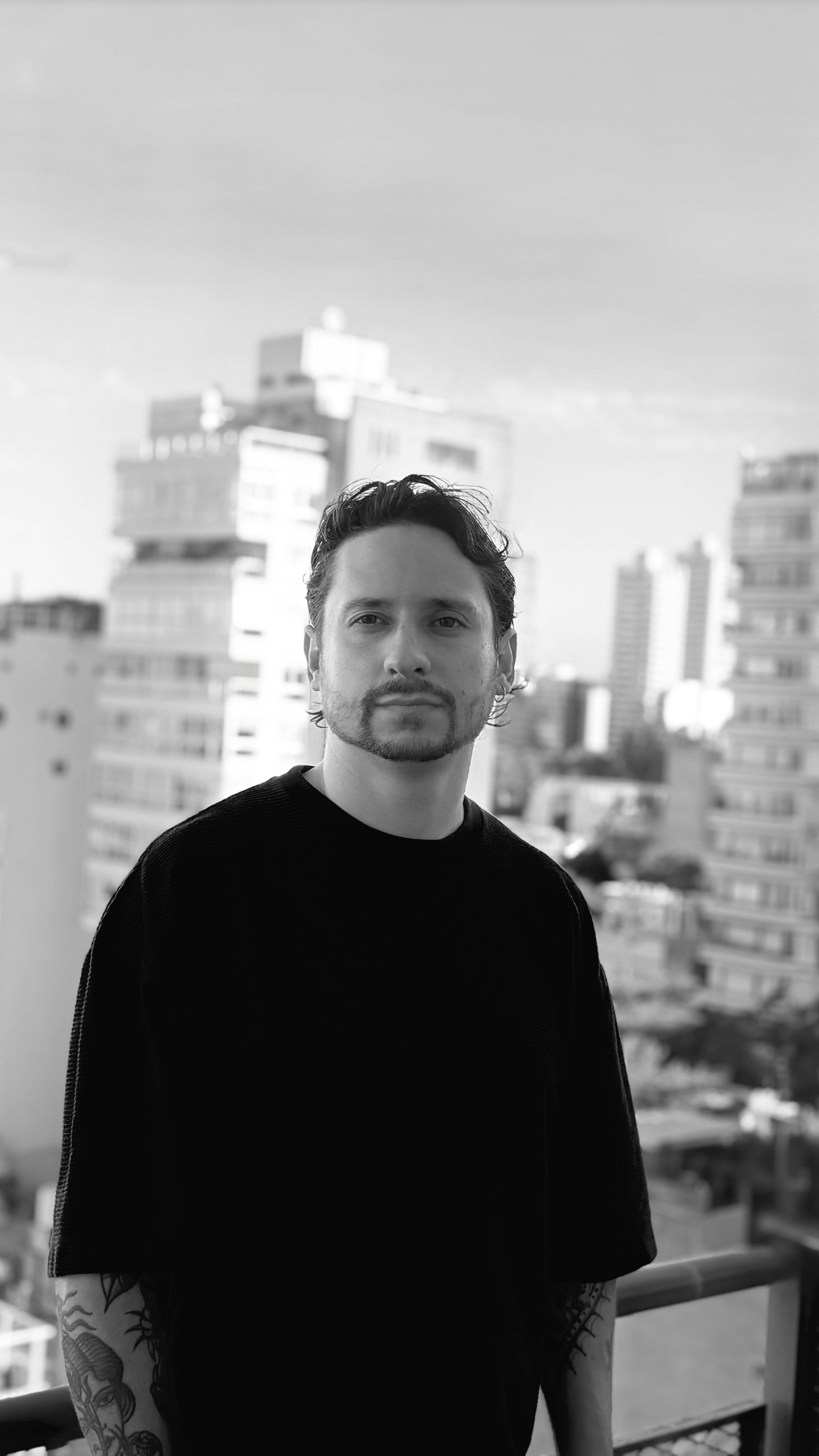
Buenos Aires, 2026
The long version
I started in art. Graffiti, letterforms, and an early obsession with how visual systems hold together. My degree was a Bachelor’s in Arts with a major in Graphic Design, and the first half of it was almost entirely analogue: we spent a long time on the point as the oldest graphic resource there is, which sounds academic until you realize it’s where every system starts. The second half moved into digital: composition, logotypes, type design, full brand manuals.
I loved it, and then I hit its limit. Almost everything I produced felt static. A manual sits on a shelf and communicates; it doesn’t respond to anyone. I wanted the work to react. So I started designing websites at my first job, and something clicked that hadn’t before: design stopped being about meeting an aesthetic standard and started having a purpose it could be measured against.
This was before UX and UI were words people used casually. When I moved to Argentina I found the discipline had a name, a method, and a market that was expanding fast. I went back to studying (courses, Sketch, then Figma), this time with a foundation in composition and systems already underneath me.
My first real UX role was at Labs, on an internal fashion commerce product. Screens, components, and feeding the design system. More importantly, it was where I learned how software actually gets built: sitting next to developers, watching a design meet a technical constraint, and finding out which of my decisions survived contact with reality.
Then the project was cancelled, and I got moved onto Salesforce. That turned out to be the most formative accident of my career. I couldn’t design anything until I understood the CRM itself: its data model, its limits, what was genuinely impossible versus merely expensive. I spent three years there and ended up leading the UX team, working across discovery, kick-off and delivery for clients including Claro Brasil, Izzi México, Digital TV and Mercantil Andina.
I joined Cactus in 2022 to build the design function for a multi-vertical POS platform, and today I lead a visual designer within it. Around 150 merchants run on it and roughly 46,000 people use it to get through a shift. The scope covers hardware POS, admin dashboards, payments, the design system holding it together, and a reporting layer that turned the platform into something merchants open to make decisions rather than to check a total. I spend real time in the venues, because a payment flow that works in Figma and a payment flow that works during a rush are not the same design.
Eight years in, the thing I’d bet on isn’t a vertical. I’ve had to learn how a CRM data model works, how a payment actually settles, why a kitchen falls apart at nine at night, and each one made the next one faster. AI is part of how I work now, not as a claim but as a method: design system and documentation loaded as context, Figma MCP writing straight into the file, which means I get to more versions of a hard idea before I commit to one. It hasn’t changed what I consider good.
How I think about the work
Understand the business first, design second.
I’ve never worked in an industry I already knew. Fashion, telco, insurance, hospitality, retail: each time the first job was to learn how money moves and where the operation breaks, because a design that ignores that is just a nice-looking guess. This is the part of consulting I kept.
Most problems are structural.
When something feels wrong in an interface, the interface is usually reporting a problem rather than causing it. Redesigning the surface makes the failure prettier and just as frequent. I’d rather change the model underneath and leave the screens mostly alone.
The interesting states are the ones nobody demos.
Empty, denied, offline, first day, edge case. Products get judged on the happy path and lived in everywhere else. I spend a disproportionate amount of my time there, and I think it’s the clearest difference between a design that survives and one that doesn’t.
I like being argued with.
The best decisions I’ve made came out of engineers telling me what it would cost and commercial teams telling me what it had to move. I work better with people who bring a constraint than with people who bring approval.
Experience
2022 — Now
Cactus
Senior Product Designer
Built the design function for a multi-vertical POS platform. Design system, payments, reporting, onboarding. Leads one visual designer.
2020 — 2022
LabsXD
UX Lead
Led UX across discovery, kick-off and delivery for Salesforce and Vlocity CRM projects in telco, insurance and media.
2019 — 2020
LabsXD
UX Designer
UX architecture and high-fidelity prototyping for enterprise CRM workflows.
2015 — 2018
Before UX
Graphic Designer
Visual systems, digital interfaces and branding.
Education
Universidad de Margarita
Bachelor’s in Arts, Graphic Design
Composition, type design and brand systems.
Toolkit
Figma
Design systems
Prototyping
Discovery & research
Salesforce / Vlocity
Design system as AI context
Figma MCP
What I’m looking for
An in-house senior role on a team where design has a seat in how the product is decided, not just how it looks. I’m not attached to a category: the products I’ve enjoyed most had nothing in common except that the underlying problem was genuinely hard.
If your product got complicated, let’s talk.
Copy email
All contact details